| 4. |
(a) What are the
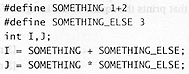
values I and J in the following program segment? |
[2] |
|
|
|
|
Values of
I and J: |
|
|
|
I = 6 |
[1] |
|
|
J = 7 |
[1] |
|
|
|
|
(b) What does the
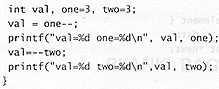
following program print? |
[4] |
|
|
|
|
Award one mark
for each of numbers in the output below. Do not deduct marks if the answers do not include
the accompanying text such as val =.. one =... |
|
|
|
val = 3
one = 2 |
[2] |
|
|
val = 2
two =2 |
[2] |
|
|
|
|
(c) Define
implementations of the following library functions: |
|
|
Implementation
of strlen, strncpy, and strrev: |
|
|
|
int strlen (char *str); |
|
|
|
void strncpy (char *dst, char
*src, int n); |
|
|
|
void strrev (char *dst, char
*src);
|
|
|
|
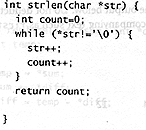
(i) Where strlen, returns the
number of characters in the string stc. |
[4] |
|
|
Definition
of strlen: |
|
|
|
 |
|
|
|
and the
following marking scheme should be used: |
|
|
|
|
one mark for iterating
down the string str until a null character is found (may be a while or for-loop). |
|
|
|
|
one mark for incrementing
src so that the loop iterates down the string. |
|
|
|
|
one mark for incrementing
a temporary counter that holds the number of characters encountered during traversing the
string. |
|
|
|
|
one mark for returning the
value of the temporary counter. |
|
|
|
|
no marks should be
deducted for trivial syntactic errors. |
|
|
|
[4
marks] |
|
|
|
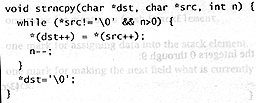
(ii) Where strncpy, copies at most
n characters of the string stc into dst. You can assume that dst is a character string
with at least n elements. |
[5] |
|
|
Definition
of strncpy: |
|
|
|
 |
|
|
|
and the
following marking scheme should be used: |
|
|
|
|
defining an iteration
statement (may be a while or for-loop), such that the loop is terminated when either a
null character is seen, |
[1] |
|
|
|
or n characters have been
copied. |
[1] |
|
|
|
During the i th
iteration of the loop, the i th character from src needs to be copies into dst. |
[1] |
|
|
|
During each iteration of
the loop, n needs to be decremented. |
[1] |
|
|
|
After the characters from
src have been copied into dst, dst has to be null terminated. |
[1] |
|
|
|
no marks should be
deducted for trivial syntactic errors. |
|
|
|
|
|
|
|
|
[5
marks] |
|
|
|
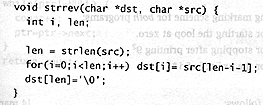
(iii) Where strrev, copies a
reversed version of src into dst. Note: you may use strlen in your definition. |
[5] |
|
|
Definition
of strrev: |
|
|
|
 |
|
|
|
and the
following marking scheme should be used: |
|
|
|
|
one mark for calculating
len, the length of src |
|
|
|
|
one mark defining an
iteration statement (may be a for or while loop), that performs len iterations. |
|
|
|
|
during iteration i, two
marks should be awarded for assigning dst[i] = src[len - i-1]. Only one mark should be
awarded if the assignment dst[i] = src[len - i] is used. |
|
|
|
|
one mark for null
terminating dst. |
|
|
|
|
no marks should be
deducted for trivial syntactic errors. |
|
|
|
[5
marks] |
|